We need you! Join our contributor community and become a WikEM editor through our open and transparent promotion process.
Dextromethorphan toxicity
From WikEM
Contents
Background
- Antitussive agent
- Acts on opioid and seratonin receptors
- At high doses has phencyclidine (PCP) and ketamine like effects on the NMDA receptor system
- High abuse in 12-25 year olds for euphoric and dissociative properties
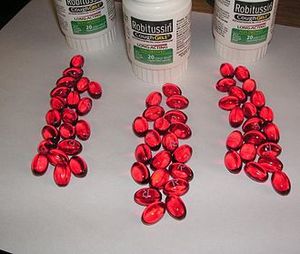
- "Skittles", "Robotripping"
Clinical Features
- Diaphoresis, hyperthermia, tachycardia
- Visual field distortion and dilated pupils
- Excitement, euphoria, hallucinations, loss of time, feelings of dissociation, inappropriate laughing
- Less respiratory depression compared to other opioids (does not act on mu/delta receptors)
- Reactions with other medications
- If anti-H1 in combination, Anticholinergic toxicity
- If α-agonist in combination, hypertension and reflex bradycardia
- If Acetaminophen in combination, hepatic toxicity
- One of several medications that may precipitate Serotonin Syndrome
Toxicity is dose dependant[1]
- Normal dose of nyquil (30 mL) has 30mg of dextromethorphan
| Plateau | Dose | Symptoms |
|---|---|---|
| 1 | 100 to 200mg | Mild stimulation, change in gravity perception |
| 2 | 200 to 400mg | Euphoria and hallucinations |
| 3 | 300 to 600mg | Dissociative and out of body sensation |
| 4 | >600mg | Complete dissociation and unresponsiveness, coma |
Differential Diagnosis
Dissociative drugs
- Dextromethorphan
- Ketamine
- Nitrous oxide
- Phencyclidine (PCP)
- NMDA receptor antagonist
Hallucinogens
- LSD
- 25C-NBOMe
- Phencyclidine
- Mescaline (Peyote)
- Psilocybin/Mushroom Poisoning
- N,N-Dimethyltryptamine
- Ecstasy (MDMA)
- PCP
- Bath Salts
- Salvia toxicity
- Marijuana
- Absinthe
Evaluation
- Given altered mental status, key importance of witnesses and EMS recovery of medication bottles
- Acetaminophen level (combination cold medicine)
- Urine drug screen may be positive for PCP or opioids
Management
- Supportive care
- IV hydration
- Cooling
- Benzodiazepines
- Naloxone is unlikely to have much effect unless there is respiratory depression
Disposition
See Also
References
- ↑ Logan BK, Yeakel JK, Goldfogel G, et al. Dextromethorphan abuse leading to assault, suicide, or homicide. J Forensic Sci 2012; 57:1388.
Authors
Daniel Eggeman, Ross Donaldson, Neil Young, Daniel Ostermayer